 English
 French

You have no items in your shopping cart.

In industrial environments, the management of airborne particulates is a critical factor for both operational efficiency and regulatory compliance. Facilities utilizing CNC machining, welding, or heavy fabrication produce a variety of contaminants including dust, smoke, and oil mist. The Minimum Efficiency Reporting Value (MERV) scale provides a standardized measurement for filter effectiveness, and in many industrial settings, MERV 11 filters represent the optimal balance between air filtration efficiency and system airflow requirements.
Selecting the correct grade of dust collector filters is not merely a maintenance task; it is a strategic decision that affects HVAC longevity, worker health, and adherence to OSHA Permissible Exposure Limits (PEL).
The Technical Role of MERV 11 in Industrial Filtration
The MERV rating system, developed by ASHRAE, ranges from 1 to 16. While residential systems often utilize lower-rated filters (MERV 1–8) to capture large particles like lint and dust, industrial applications require the higher capture rates provided by MERV 11 and above.
A MERV 11 filter is engineered to capture:
- 80% to 95% of particles in the 3.0 to 10.0 micron range (coarse dust, sanding dust, and pollen).
- 50% to 65% of particles in the 1.0 to 3.0 micron range (lead dust, auto emissions, and fine metal shavings).
- Up to 20% of particles smaller than 1.0 micron (smoke and some bacteria).
In an industrial shop, these specifications are vital for capturing the fine metal dust generated by grinding or the bypass emissions from a welding fume extractor. While a HEPA filter (MERV 17+) offers higher efficiency, it also introduces significant static pressure, which can strain industrial blowers and reduce total Cubic Feet per Minute (CFM) across the facility. MERV 11 provides high-level protection without the excessive pressure drop that can compromise system performance.

OSHA Compliance and Air Quality Standards
OSHA regulations, specifically 29 CFR 1910.1000, mandate that employers limit worker exposure to hazardous airborne contaminants. For facilities involved in metalworking, the focus is often on hexavalent chromium, lead, and other metallic fumes. Failure to maintain these levels below the PEL can lead to significant fines and mandatory operational shutdowns.
Implementing MERV 11 filtration in an industrial dust collector or as part of a multi-stage mist collector setup helps ensure that fine particles are trapped before they can enter the breathing zone of employees. For shops processing stainless steel or alloys, air quality monitoring often reveals that standard MERV 8 pre-filters are insufficient. Upgrading to MERV 11 media provides an immediate reduction in ambient particulate matter, facilitating easier compliance during air quality audits.
Addressing Oil Mist and Smoke
In machining centers where high-speed cutting creates thermal distress, an oil mist collector is essential. Oil mist particles often fall into the 1 to 5 micron range. Using a MERV 11 secondary filter ensures that the residual mist that escapes primary separation (such as centrifugal or electrostatic precipitators) is successfully captured before air is recirculated into the facility.

Optimizing Performance in Welding and Machining Environments
The integration of MERV 11 filters into specialized equipment like a welding fume extractor requires an understanding of loading patterns. Welding smoke consists of ultra-fine particles, often smaller than 1 micron. While MERV 11 is not a final-stage filter for heavy smoke: where a HEPA or electrostatic precipitator might be required: it serves as a high-capacity intermediate filter that protects more expensive final-stage media.
Case Study: CNC Machining Facility
A mid-sized fabrication shop in Western Canada experienced frequent downtime due to oily residue accumulating on sensitive electronics and cooling fans. The shop utilized a standard central HVAC system with MERV 8 filters. By upgrading to Glasfloss MERV 11 pleated filters, the facility saw a 40% reduction in surface dust accumulation over a 30-day period. This change reduced maintenance requirements for the facility's CNC controllers and improved overall air clarity.
Cost-Efficiency and Preventative Maintenance
A common concern for industrial shop managers is the cost of high-efficiency filters. However, the financial impact of poor air quality often outweighs the price of premium filtration media.
- Reduced Machinery Downtime: Fine dust can infiltrate control panels and gearboxes, leading to overheating and premature wear.
- Energy Savings: Advanced MERV 11 filters, such as those engineered by Parker Hannifin, are designed with specialized pleat geometries that maximize surface area. This reduces the frequency of filter changes and lowers the energy required to pull air through the system.
- Lower HVAC Maintenance: By capturing more particulates at the filtration stage, cooling coils and blowers remain cleaner, preventing the "insulating" effect of dust that forces HVAC compressors to run longer.
Monitoring Pressure Drop
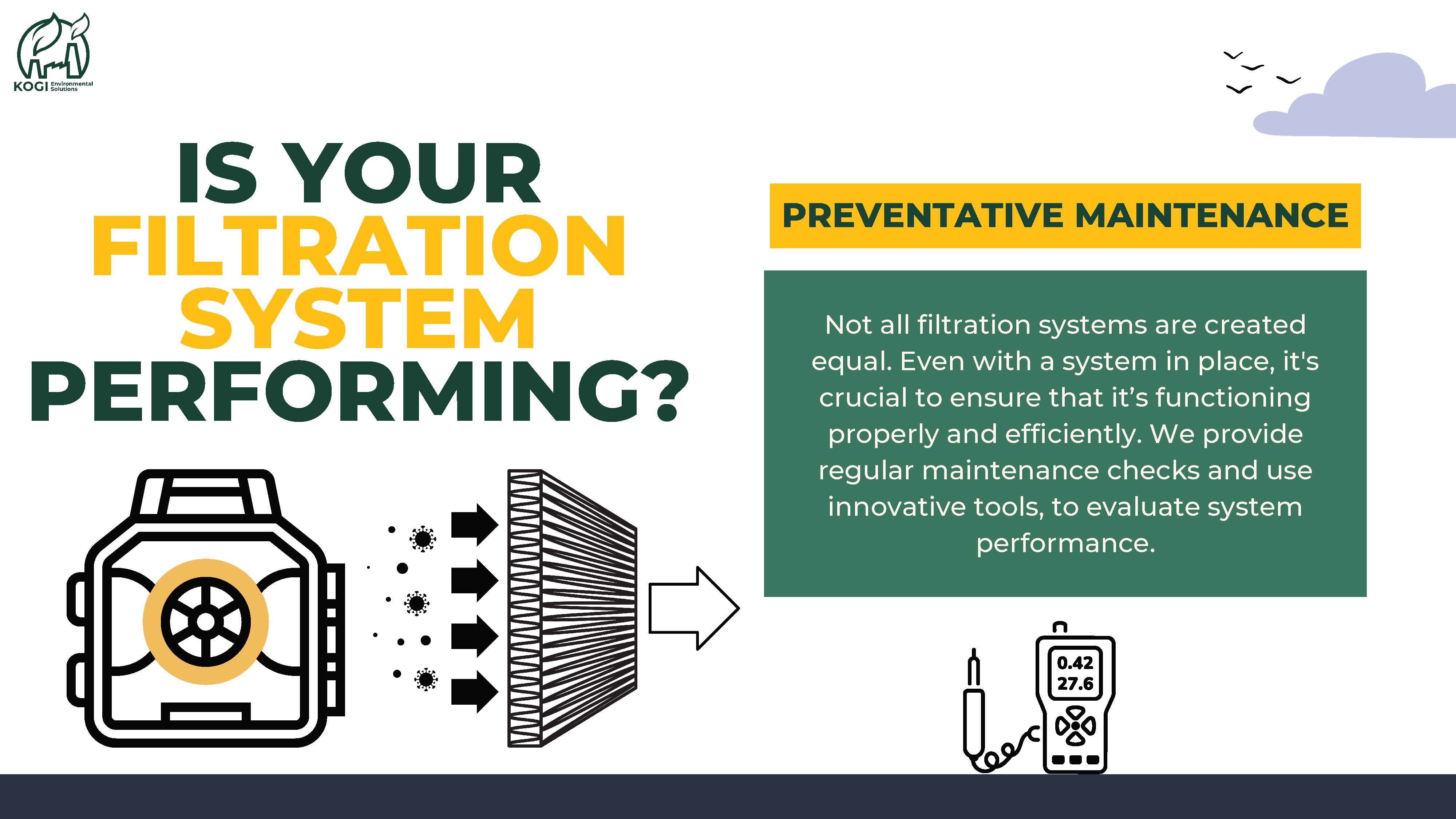
Effective maintenance of an industrial air system requires monitoring the pressure differential across the filter bank. As a MERV 11 filter loads with dust, the resistance increases. Shop managers should establish "change-out" protocols based on manometer readings rather than calendar dates. This ensures that filters are replaced only when necessary, but before they cause the system to "starve" for air, which can lead to motor failure in a compressed air dryer or dust collection unit.
Selecting the Right Filter Media
Kogi Environmental Solutions partners with leading OEMs to provide engineered filtration solutions tailored to specific industrial processes. Whether you are managing a high-volume foundry or a precision electronics cleanroom, the choice of filter media must align with the particle size distribution of your waste stream.
For shops requiring high-performance dust collection, A.C.T. Dust Collectors often utilize MERV 11 or higher cartridge filters as standard equipment to ensure compliance with NFPA standards regarding combustible dust. Similarly, for facilities focused on smoke extraction, brands like Movex provide source extraction arms that can be fitted with MERV 11 primary filters to handle heavy loading in welding bays.
Key Factors in Filter Selection:
- Filter Depth: 1", 2", and 4" options; deeper filters provide more surface area and longer service life.
- Media Type: Synthetic vs. fiberglass. Synthetic media is generally preferred in industrial settings for its durability and resistance to moisture.
- Frame Construction: High-moisture or high-vibration environments require moisture-resistant beverage board or metal frames to prevent filter collapse.

Enhancing Air Quality Beyond Filters
While MERV 11 filters are a cornerstone of industrial air quality, they work best as part of a comprehensive strategy. This includes:
- Source Capture: Using a welding fume extractor directly at the workstation to minimize the volume of air that needs to be filtered by the central system.
- Proper Ducting: Ensuring that Nordfab ducting is correctly sized to maintain the necessary transport velocity, preventing dust from settling in the pipes.
- System Airflow: Utilizing high-efficiency Cincinnati Fan or Daniels Fans to ensure consistent air exchange rates throughout the facility.
Conclusion: Immediate Steps for Shop Managers
Improving industrial air quality does not always require a total system overhaul. Upgrading existing filter banks to MERV 11 media is one of the most cost-effective ways to boost filtration efficiency and move toward OSHA compliance. By capturing a higher percentage of the sub-3-micron particles that represent the greatest health risk, facilities can protect their workforce and their bottom line simultaneously.
For expert advice on optimizing your facility's air quality or to source specialized filters for your equipment, contact Kogi Environmental Solutions. Our team provides on-site evaluations and engineered solutions designed to meet the rigorous demands of modern industrial environments. You can also explore our full range of filtration products in our online store to find the exact specifications for your dust collector or mist extraction system.
In industrial environments, the management of airborne particulates is a critical factor for both operational efficiency and regulatory compliance. Facilities utilizing CNC machining, welding, or heavy fabrication produce a variety of contaminants including dust, smoke, and oil mist. The Minimum Efficiency Reporting Value (MERV) scale provides a standardized measurement for filter effectiveness, and in many industrial settings, MERV 11 filters represent the optimal balance between air filtration efficiency and system airflow requirements.
Selecting the correct grade of dust collector filters is not merely a maintenance task; it is a strategic decision that affects HVAC longevity, worker health, and adherence to OSHA Permissible Exposure Limits (PEL).
The Technical Role of MERV 11 in Industrial Filtration
The MERV rating system, developed by ASHRAE, ranges from 1 to 16. While residential systems often utilize lower-rated filters (MERV 1–8) to capture large particles like lint and dust, industrial applications require the higher capture rates provided by MERV 11 and above.
A MERV 11 filter is engineered to capture:
- 80% to 95% of particles in the 3.0 to 10.0 micron range (coarse dust, sanding dust, and pollen).
- 50% to 65% of particles in the 1.0 to 3.0 micron range (lead dust, auto emissions, and fine metal shavings).
- Up to 20% of particles smaller than 1.0 micron (smoke and some bacteria).
In an industrial shop, these specifications are vital for capturing the fine metal dust generated by grinding or the bypass emissions from a welding fume extractor. While a HEPA filter (MERV 17+) offers higher efficiency, it also introduces significant static pressure, which can strain industrial blowers and reduce total Cubic Feet per Minute (CFM) across the facility. MERV 11 provides high-level protection without the excessive pressure drop that can compromise system performance.
OSHA Compliance and Air Quality Standards
OSHA regulations, specifically 29 CFR 1910.1000, mandate that employers limit worker exposure to hazardous airborne contaminants. For facilities involved in metalworking, the focus is often on hexavalent chromium, lead, and other metallic fumes. Failure to maintain these levels below the PEL can lead to significant fines and mandatory operational shutdowns.
Implementing MERV 11 filtration in an industrial dust collector or as part of a multi-stage mist collector setup helps ensure that fine particles are trapped before they can enter the breathing zone of employees. For shops processing stainless steel or alloys, air quality monitoring often reveals that standard MERV 8 pre-filters are insufficient. Upgrading to MERV 11 media provides an immediate reduction in ambient particulate matter, facilitating easier compliance during air quality audits.
Addressing Oil Mist and Smoke
In machining centers where high-speed cutting creates thermal distress, an oil mist collector is essential. Oil mist particles often fall into the 1 to 5 micron range. Using a MERV 11 secondary filter ensures that the residual mist that escapes primary separation (such as centrifugal or electrostatic precipitators) is successfully captured before air is recirculated into the facility.
Optimizing Performance in Welding and Machining Environments
The integration of MERV 11 filters into specialized equipment like a welding fume extractor requires an understanding of loading patterns. Welding smoke consists of ultra-fine particles, often smaller than 1 micron. While MERV 11 is not a final-stage filter for heavy smoke: where a HEPA or electrostatic precipitator might be required: it serves as a high-capacity intermediate filter that protects more expensive final-stage media.
Case Study: CNC Machining Facility
A mid-sized fabrication shop in Western Canada experienced frequent downtime due to oily residue accumulating on sensitive electronics and cooling fans. The shop utilized a standard central HVAC system with MERV 8 filters. By upgrading to Glasfloss MERV 11 pleated filters, the facility saw a 40% reduction in surface dust accumulation over a 30-day period. This change reduced maintenance requirements for the facility's CNC controllers and improved overall air clarity.
Cost-Efficiency and Preventative Maintenance
A common concern for industrial shop managers is the cost of high-efficiency filters. However, the financial impact of poor air quality often outweighs the price of premium filtration media.
- Reduced Machinery Downtime: Fine dust can infiltrate control panels and gearboxes, leading to overheating and premature wear.
- Energy Savings: Advanced MERV 11 filters, such as those engineered by Parker Hannifin, are designed with specialized pleat geometries that maximize surface area. This reduces the frequency of filter changes and lowers the energy required to pull air through the system.
- Lower HVAC Maintenance: By capturing more particulates at the filtration stage, cooling coils and blowers remain cleaner, preventing the "insulating" effect of dust that forces HVAC compressors to run longer.
Monitoring Pressure Drop
Effective maintenance of an industrial air system requires monitoring the pressure differential across the filter bank. As a MERV 11 filter loads with dust, the resistance increases. Shop managers should establish "change-out" protocols based on manometer readings rather than calendar dates. This ensures that filters are replaced only when necessary, but before they cause the system to "starve" for air, which can lead to motor failure in a compressed air dryer or dust collection unit.
Selecting the Right Filter Media
Kogi Environmental Solutions partners with leading OEMs to provide engineered filtration solutions tailored to specific industrial processes. Whether you are managing a high-volume foundry or a precision electronics cleanroom, the choice of filter media must align with the particle size distribution of your waste stream.
For shops requiring high-performance dust collection, A.C.T. Dust Collectors often utilize MERV 11 or higher cartridge filters as standard equipment to ensure compliance with NFPA standards regarding combustible dust. Similarly, for facilities focused on smoke extraction, brands like Movex provide source extraction arms that can be fitted with MERV 11 primary filters to handle heavy loading in welding bays.
Key Factors in Filter Selection:
- Filter Depth: 1", 2", and 4" options; deeper filters provide more surface area and longer service life.
- Media Type: Synthetic vs. fiberglass. Synthetic media is generally preferred in industrial settings for its durability and resistance to moisture.
- Frame Construction: High-moisture or high-vibration environments require moisture-resistant beverage board or metal frames to prevent filter collapse.
Enhancing Air Quality Beyond Filters
While MERV 11 filters are a cornerstone of industrial air quality, they work best as part of a comprehensive strategy. This includes:
- Source Capture: Using a welding fume extractor directly at the workstation to minimize the volume of air that needs to be filtered by the central system.
- Proper Ducting: Ensuring that Nordfab ducting is correctly sized to maintain the necessary transport velocity, preventing dust from settling in the pipes.
- System Airflow: Utilizing high-efficiency Cincinnati Fan or Daniels Fans to ensure consistent air exchange rates throughout the facility.
Conclusion: Immediate Steps for Shop Managers
Improving industrial air quality does not always require a total system overhaul. Upgrading existing filter banks to MERV 11 media is one of the most cost-effective ways to boost filtration efficiency and move toward OSHA compliance. By capturing a higher percentage of the sub-3-micron particles that represent the greatest health risk, facilities can protect their workforce and their bottom line simultaneously.
For expert advice on optimizing your facility's air quality or to source specialized filters for your equipment, contact Kogi Environmental Solutions. Our team provides on-site evaluations and engineered solutions designed to meet the rigorous demands of modern industrial environments. You can also explore our full range of filtration products in our online store to find the exact specifications for your dust collector or mist extraction system.
Artículos recientes


← Publicación más antigua Publicación más reciente →