 English
 French

You have no items in your shopping cart.

A welding fume extractor is only effective when it captures contaminants at the source, maintains the required airflow, and is operated as part of a broader exposure-control program. Poor positioning, neglected filters, leaking ductwork, and undocumented maintenance can reduce capture performance without creating an obvious equipment failure.
Welding fumes may contain manganese, chromium, nickel, lead, iron, and other metal constituents. OSHA’s welding and cutting guidance notes that prolonged manganese exposure can cause nervous system effects, including Parkinson’s-like symptoms. OSHA does not establish one permissible exposure limit for “welding fumes” as a mixture. Instead, exposure limits may apply to specific substances in the fume, such as manganese and hexavalent chromium.
The following seven mistakes are common in industrial welding shops. Each one has a practical correction.
1. Positioning the Extractor Arm Too Far from the Weld
The most common operational mistake is placing the hood or extractor arm too far from the welding arc. A fume extractor works through source capture. As the distance from the plume increases, the required airflow also increases and the capture zone becomes less effective.
Moving the arm aside for better access is also common. The problem occurs when the arm is not repositioned before welding resumes. The extractor may be running, but the fume is already entering the welder’s breathing zone.
How to fix it
- Keep the hood or nozzle as close to the weld plume as practical.
- Reposition the arm whenever the workpiece, fixture, or welding position changes.
- Train welders to check the capture position before starting an operation.
- Keep the head and upper body out of the path between the weld and the hood.
- For extraction torches, keep the capture openings oriented toward the arc.
OSHA specifically recommends keeping fume hoods, extractor guns, and vacuum nozzles close to the plume source. A visible plume moving past the operator is an indication that the capture arrangement requires review.
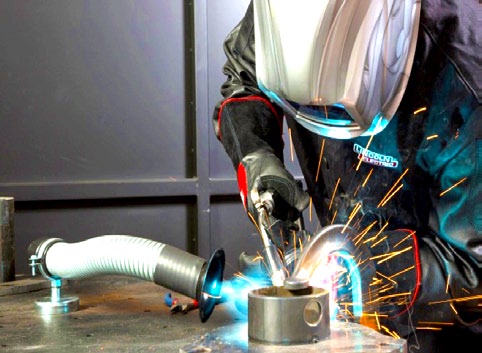
Source: OSHA, Controlling Hazardous Fume and Gases during Welding.
2. Relying on General Ventilation Instead of Source Capture
Opening doors, running roof fans, or increasing general shop ventilation does not necessarily control welding fume at the point of generation. General dilution ventilation can move contaminants around the facility before they are removed.
This approach is particularly problematic in enclosed welding bays, restricted spaces, or areas with multiple simultaneous welding operations. Workers outside the immediate welding station may also be exposed when contaminated air migrates through the shop.
How to fix it
Use local exhaust ventilation as the primary engineering control whenever the process and layout allow it. Evaluate:
- Welding process, such as FCAW, SMAW, GMAW, or GTAW
- Base metal, filler metal, and coatings
- Number and location of welding stations
- Welding duty cycle and production volume
- Air movement from doors, fans, cranes, and make-up air systems
- Whether filtered air is exhausted indoors or outdoors
OSHA’s welding guidance identifies local exhaust ventilation as a method for removing fumes and gases from the welder’s breathing zone. General ventilation remains important, but it should not be treated as a substitute for properly designed source capture.
3. Ignoring Filter Loading and Differential Pressure
A welding fume extractor can continue to run while its filter is loaded, damaged, or nearing the manufacturer’s pressure-drop limit. Motor operation alone does not confirm adequate capture.
As the filter loads, resistance increases. Airflow at the hood may decline, while energy consumption and motor strain increase. If the system does not have a functioning pressure gauge, differential pressure monitor, or filter indicator, operators may not recognize the problem until smoke becomes visible in the work area.
How to fix it
- Check the differential-pressure indicator at the frequency specified by the manufacturer.
- Record readings and look for gradual increases over time.
- Establish filter replacement limits based on the equipment manual, not appearance alone.
- Inspect cartridges and pre-filters for damage, bypass, or improper seating.
- Keep replacement filters available to avoid extended operation with restricted airflow.
Filter service intervals depend on the welding process, consumables, duty cycle, and collector design. A fixed calendar interval may be useful, but pressure drop and measured airflow provide better indicators of actual system condition.
4. Overlooking Leaks, Blockages, and Damaged Ducting
A welding fume extractor is part of an air-handling system. The hood, flexible hose, ductwork, dampers, fan, filter housing, and exhaust connection all affect performance.
A cracked hose or loose clamp can reduce suction at the hood. A crushed flexible duct can create a restriction. Metal debris and accumulated particulate can obstruct the airflow path. In a multi-station system, an incorrectly positioned damper may send too much airflow to one station and too little to another.
How to fix it
Inspect the complete airflow path during planned maintenance:
- Flexible hoses and articulated arms
- Hood connections and capture nozzles
- Clamps, gaskets, and access doors
- Duct joints and transition pieces
- Dampers and blast gates
- Fan belts, bearings, and guards
- Filter seals and housing panels
- Exhaust discharge points
Compare measured airflow with the equipment’s design requirements. If a system previously performed well but now has weak suction, check for filter loading, leaks, blockages, fan problems, and changes to the duct layout before replacing the collector.
Kogi Environmental Solutions provides source capture and extraction equipment through Movex (Fumex), including extraction arms, filters, fans, vehicle exhaust extraction, and controls.
5. Cleaning the Collector with Compressed Air
Blowing dust from filters, housings, hoses, or extraction torches with compressed air can re-aerosolize concentrated contaminants. The particles may spread through the shop or expose maintenance personnel at close range.
This is particularly concerning when collected dust contains manganese, chromium, nickel, lead, or other hazardous constituents. A filter that is not designed to be cleaned should not be tapped, washed, or blown out as a cost-saving measure.
How to fix it
Follow the manufacturer’s cleaning and filter-replacement procedure. Before service:
- Shut down and isolate the equipment.
- Apply the facility’s lockout/tagout procedure.
- Wear the PPE specified by the hazard assessment.
- Use controlled vacuum methods where approved.
- Bag and dispose of used filters and collected material appropriately.
- Replace damaged or non-serviceable components.
Maintenance personnel should review the applicable safety data sheets and site procedures before handling collected dust. Filter replacement is not simply a mechanical task; it is also a potential exposure event.
6. Discharging Filtered Air Toward Workers
Some portable systems return filtered air to the shop. This may be acceptable only when the equipment, filtration stage, and application support indoor recirculation. Even then, the discharge should not point toward welders or other workers.
A poorly directed discharge can disturb settled dust, interfere with source capture, or return residual contaminants to the breathing zone. Inadequate filtration or a damaged filter can make indoor recirculation unsuitable for the application.
How to fix it
- Confirm whether the system is designed for indoor recirculation.
- Direct discharge away from personnel and adjacent workstations.
- Inspect final filtration stages and seals.
- Consider outdoor exhaust where feasible and appropriate.
- Reassess the arrangement after changes to room layout or production volume.
- Use air monitoring to verify the control strategy.
OSHA advises that portable exhaust systems should be positioned so fumes and gases are drawn away from the welder and that exhaust ports remain away from other workers. A welding fume extractor should remove contaminants without creating a secondary exposure pathway.
7. Operating Without Documented Inspections or Exposure Monitoring
A collector may sound normal and appear clean while exposure conditions have changed. New welding consumables, increased production, altered ductwork, additional welding stations, or a change in building airflow can affect performance.
Relying on visibility, odor, or worker complaints is not sufficient. Fine particulate and metal constituents may be present even when the shop appears clear.
How to fix it
Create a documented program with responsibilities for operators, maintenance staff, and qualified service professionals.
Daily operator checks
- Hood or arm positioned near the plume
- Extractor operating before welding begins
- No visible smoke bypassing the hood
- No unusual noise or vibration
- No damaged hose, arm, or nozzle
Weekly or monthly maintenance checks
- Filter indicator and differential pressure
- Hose, duct, and connection condition
- Fan and motor operation
- Dampers and access panels
- Dust trays and collection containers
- Filter seals and housing integrity
Periodic verification
- Measure airflow at the hood or capture point.
- Compare results with manufacturer specifications.
- Inspect the full duct and fan system.
- Conduct personal or area air monitoring when required.
- Test for manganese and other relevant metals based on the welding process and materials.
NIOSH recommends local exhaust ventilation to remove fumes and gases from the welder’s breathing zone. Its welding information also identifies manganese as a significant occupational hazard. Exposure monitoring helps determine whether the control system is working in practice, rather than simply confirming that a fan is running.
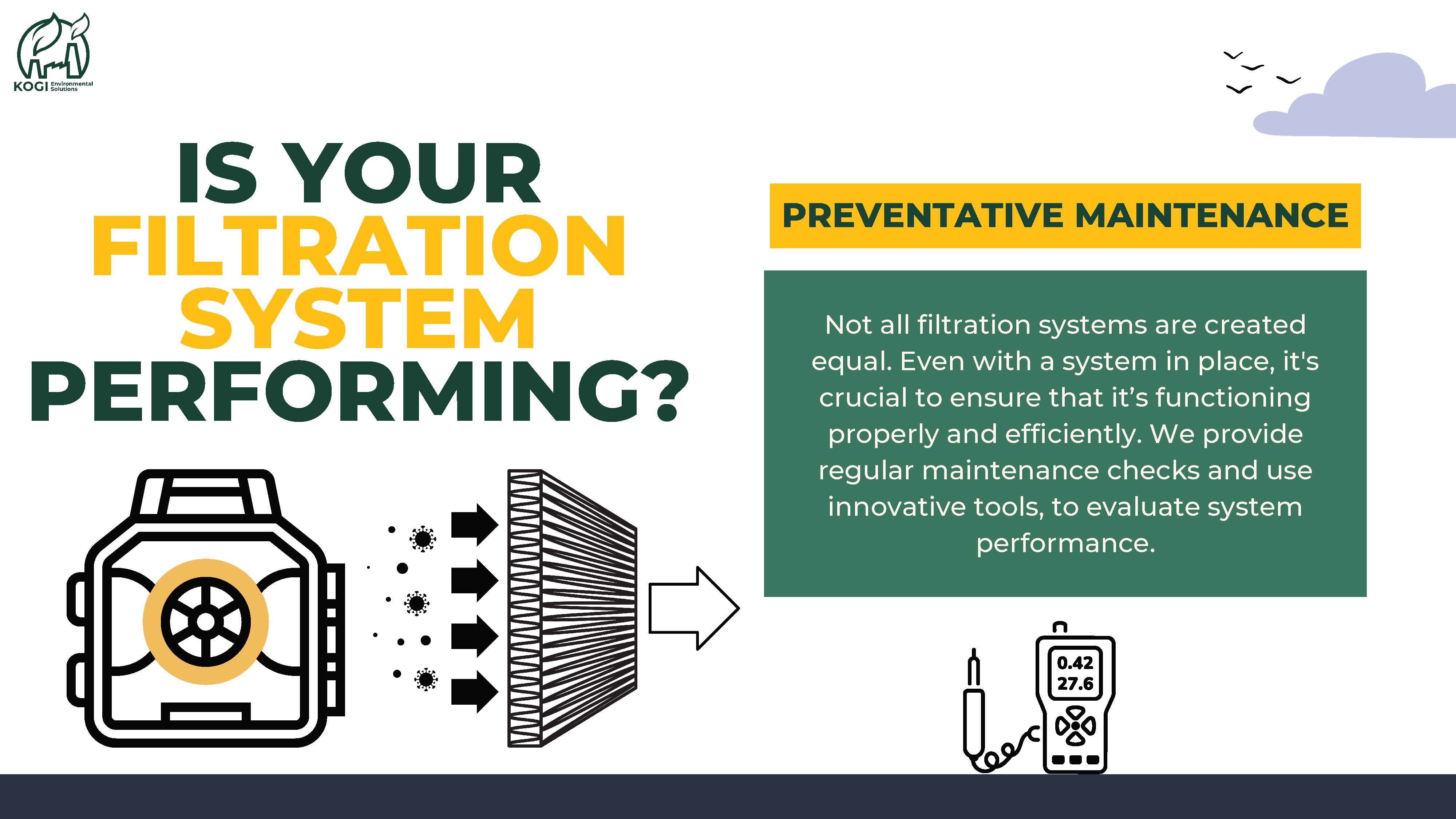
OSHA Compliance Requires More Than a Running Fan
An operating welding fume extractor is one component of a compliant exposure-control program. Employers must evaluate the hazards associated with the materials and processes used, provide appropriate ventilation, train workers, maintain equipment, and determine whether respiratory protection or additional controls are necessary.
The OSHA Welding, Cutting, and Brazing resource links to applicable standards and hazard-control information. Requirements may also vary by state plan, province, industry, and specific workplace conditions.

Welding Fume Extractor Maintenance Checklist
Use this short checklist during the next shop inspection:
- Is the hood within the effective capture distance?
- Is the welder positioned outside the fume path?
- Is the filter pressure within the manufacturer’s operating range?
- Are hoses, ducts, clamps, and seals intact?
- Is the fan delivering the specified airflow?
- Is the exhaust discharge directed away from workers?
- Are filter changes and inspections documented?
- Has air monitoring been reviewed after process or layout changes?
- Are maintenance workers protected during filter and dust handling?
- Are manganese and other relevant contaminants included in the exposure assessment?
A welding fume extractor performs as designed only when the complete system is correctly selected, installed, operated, and maintained. For support with source capture, ducting, filtration, airflow testing, or service planning, review the Kogi Environmental Solutions resources or contact an experienced industrial air quality specialist.
A welding fume extractor is only effective when it captures contaminants at the source, maintains the required airflow, and is operated as part of a broader exposure-control program. Poor positioning, neglected filters, leaking ductwork, and undocumented maintenance can reduce capture performance without creating an obvious equipment failure.
Welding fumes may contain manganese, chromium, nickel, lead, iron, and other metal constituents. OSHA’s welding and cutting guidance notes that prolonged manganese exposure can cause nervous system effects, including Parkinson’s-like symptoms. OSHA does not establish one permissible exposure limit for “welding fumes” as a mixture. Instead, exposure limits may apply to specific substances in the fume, such as manganese and hexavalent chromium.
The following seven mistakes are common in industrial welding shops. Each one has a practical correction.
1. Positioning the Extractor Arm Too Far from the Weld
The most common operational mistake is placing the hood or extractor arm too far from the welding arc. A fume extractor works through source capture. As the distance from the plume increases, the required airflow also increases and the capture zone becomes less effective.
Moving the arm aside for better access is also common. The problem occurs when the arm is not repositioned before welding resumes. The extractor may be running, but the fume is already entering the welder’s breathing zone.
How to fix it
- Keep the hood or nozzle as close to the weld plume as practical.
- Reposition the arm whenever the workpiece, fixture, or welding position changes.
- Train welders to check the capture position before starting an operation.
- Keep the head and upper body out of the path between the weld and the hood.
- For extraction torches, keep the capture openings oriented toward the arc.
OSHA specifically recommends keeping fume hoods, extractor guns, and vacuum nozzles close to the plume source. A visible plume moving past the operator is an indication that the capture arrangement requires review.
Source: OSHA, Controlling Hazardous Fume and Gases during Welding.
2. Relying on General Ventilation Instead of Source Capture
Opening doors, running roof fans, or increasing general shop ventilation does not necessarily control welding fume at the point of generation. General dilution ventilation can move contaminants around the facility before they are removed.
This approach is particularly problematic in enclosed welding bays, restricted spaces, or areas with multiple simultaneous welding operations. Workers outside the immediate welding station may also be exposed when contaminated air migrates through the shop.
How to fix it
Use local exhaust ventilation as the primary engineering control whenever the process and layout allow it. Evaluate:
- Welding process, such as FCAW, SMAW, GMAW, or GTAW
- Base metal, filler metal, and coatings
- Number and location of welding stations
- Welding duty cycle and production volume
- Air movement from doors, fans, cranes, and make-up air systems
- Whether filtered air is exhausted indoors or outdoors
OSHA’s welding guidance identifies local exhaust ventilation as a method for removing fumes and gases from the welder’s breathing zone. General ventilation remains important, but it should not be treated as a substitute for properly designed source capture.
3. Ignoring Filter Loading and Differential Pressure
A welding fume extractor can continue to run while its filter is loaded, damaged, or nearing the manufacturer’s pressure-drop limit. Motor operation alone does not confirm adequate capture.
As the filter loads, resistance increases. Airflow at the hood may decline, while energy consumption and motor strain increase. If the system does not have a functioning pressure gauge, differential pressure monitor, or filter indicator, operators may not recognize the problem until smoke becomes visible in the work area.
How to fix it
- Check the differential-pressure indicator at the frequency specified by the manufacturer.
- Record readings and look for gradual increases over time.
- Establish filter replacement limits based on the equipment manual, not appearance alone.
- Inspect cartridges and pre-filters for damage, bypass, or improper seating.
- Keep replacement filters available to avoid extended operation with restricted airflow.
Filter service intervals depend on the welding process, consumables, duty cycle, and collector design. A fixed calendar interval may be useful, but pressure drop and measured airflow provide better indicators of actual system condition.
4. Overlooking Leaks, Blockages, and Damaged Ducting
A welding fume extractor is part of an air-handling system. The hood, flexible hose, ductwork, dampers, fan, filter housing, and exhaust connection all affect performance.
A cracked hose or loose clamp can reduce suction at the hood. A crushed flexible duct can create a restriction. Metal debris and accumulated particulate can obstruct the airflow path. In a multi-station system, an incorrectly positioned damper may send too much airflow to one station and too little to another.
How to fix it
Inspect the complete airflow path during planned maintenance:
- Flexible hoses and articulated arms
- Hood connections and capture nozzles
- Clamps, gaskets, and access doors
- Duct joints and transition pieces
- Dampers and blast gates
- Fan belts, bearings, and guards
- Filter seals and housing panels
- Exhaust discharge points
Compare measured airflow with the equipment’s design requirements. If a system previously performed well but now has weak suction, check for filter loading, leaks, blockages, fan problems, and changes to the duct layout before replacing the collector.
Kogi Environmental Solutions provides source capture and extraction equipment through Movex (Fumex), including extraction arms, filters, fans, vehicle exhaust extraction, and controls.
5. Cleaning the Collector with Compressed Air
Blowing dust from filters, housings, hoses, or extraction torches with compressed air can re-aerosolize concentrated contaminants. The particles may spread through the shop or expose maintenance personnel at close range.
This is particularly concerning when collected dust contains manganese, chromium, nickel, lead, or other hazardous constituents. A filter that is not designed to be cleaned should not be tapped, washed, or blown out as a cost-saving measure.
How to fix it
Follow the manufacturer’s cleaning and filter-replacement procedure. Before service:
- Shut down and isolate the equipment.
- Apply the facility’s lockout/tagout procedure.
- Wear the PPE specified by the hazard assessment.
- Use controlled vacuum methods where approved.
- Bag and dispose of used filters and collected material appropriately.
- Replace damaged or non-serviceable components.
Maintenance personnel should review the applicable safety data sheets and site procedures before handling collected dust. Filter replacement is not simply a mechanical task; it is also a potential exposure event.
6. Discharging Filtered Air Toward Workers
Some portable systems return filtered air to the shop. This may be acceptable only when the equipment, filtration stage, and application support indoor recirculation. Even then, the discharge should not point toward welders or other workers.
A poorly directed discharge can disturb settled dust, interfere with source capture, or return residual contaminants to the breathing zone. Inadequate filtration or a damaged filter can make indoor recirculation unsuitable for the application.
How to fix it
- Confirm whether the system is designed for indoor recirculation.
- Direct discharge away from personnel and adjacent workstations.
- Inspect final filtration stages and seals.
- Consider outdoor exhaust where feasible and appropriate.
- Reassess the arrangement after changes to room layout or production volume.
- Use air monitoring to verify the control strategy.
OSHA advises that portable exhaust systems should be positioned so fumes and gases are drawn away from the welder and that exhaust ports remain away from other workers. A welding fume extractor should remove contaminants without creating a secondary exposure pathway.
7. Operating Without Documented Inspections or Exposure Monitoring
A collector may sound normal and appear clean while exposure conditions have changed. New welding consumables, increased production, altered ductwork, additional welding stations, or a change in building airflow can affect performance.
Relying on visibility, odor, or worker complaints is not sufficient. Fine particulate and metal constituents may be present even when the shop appears clear.
How to fix it
Create a documented program with responsibilities for operators, maintenance staff, and qualified service professionals.
Daily operator checks
- Hood or arm positioned near the plume
- Extractor operating before welding begins
- No visible smoke bypassing the hood
- No unusual noise or vibration
- No damaged hose, arm, or nozzle
Weekly or monthly maintenance checks
- Filter indicator and differential pressure
- Hose, duct, and connection condition
- Fan and motor operation
- Dampers and access panels
- Dust trays and collection containers
- Filter seals and housing integrity
Periodic verification
- Measure airflow at the hood or capture point.
- Compare results with manufacturer specifications.
- Inspect the full duct and fan system.
- Conduct personal or area air monitoring when required.
- Test for manganese and other relevant metals based on the welding process and materials.
NIOSH recommends local exhaust ventilation to remove fumes and gases from the welder’s breathing zone. Its welding information also identifies manganese as a significant occupational hazard. Exposure monitoring helps determine whether the control system is working in practice, rather than simply confirming that a fan is running.
OSHA Compliance Requires More Than a Running Fan
An operating welding fume extractor is one component of a compliant exposure-control program. Employers must evaluate the hazards associated with the materials and processes used, provide appropriate ventilation, train workers, maintain equipment, and determine whether respiratory protection or additional controls are necessary.
The OSHA Welding, Cutting, and Brazing resource links to applicable standards and hazard-control information. Requirements may also vary by state plan, province, industry, and specific workplace conditions.
Welding Fume Extractor Maintenance Checklist
Use this short checklist during the next shop inspection:
- Is the hood within the effective capture distance?
- Is the welder positioned outside the fume path?
- Is the filter pressure within the manufacturer’s operating range?
- Are hoses, ducts, clamps, and seals intact?
- Is the fan delivering the specified airflow?
- Is the exhaust discharge directed away from workers?
- Are filter changes and inspections documented?
- Has air monitoring been reviewed after process or layout changes?
- Are maintenance workers protected during filter and dust handling?
- Are manganese and other relevant contaminants included in the exposure assessment?
A welding fume extractor performs as designed only when the complete system is correctly selected, installed, operated, and maintained. For support with source capture, ducting, filtration, airflow testing, or service planning, review the Kogi Environmental Solutions resources or contact an experienced industrial air quality specialist.
Artículos recientes


← Publicación más antigua Publicación más reciente →